The kitchen isn’t just where meals happen—it’s where buyers decide how they feel about a home. A well-designed kitchen can quietly add serious value, while a dated or poorly planned one can drag the entire property down. Understanding how kitchen design influences home value helps homeowners make smarter renovation choices and avoid upgrades that don’t pay off.
Below, we break down exactly what matters, why it matters, and how design decisions translate into real financial returns.
Why the Kitchen Matters More Than Any Other Room
Buyers consistently rank the kitchen as the most important space in a home. It’s viewed as both a functional workspace and a social hub, which gives it outsized influence on perceived value.
A thoughtfully designed kitchen signals:
-
Careful maintenance
-
Modern living standards
-
Move-in readiness
Even when buyers plan renovations, a strong kitchen sets a higher baseline price and attracts more interest early in the listing period.
Layout and Flow: The Foundation of Value
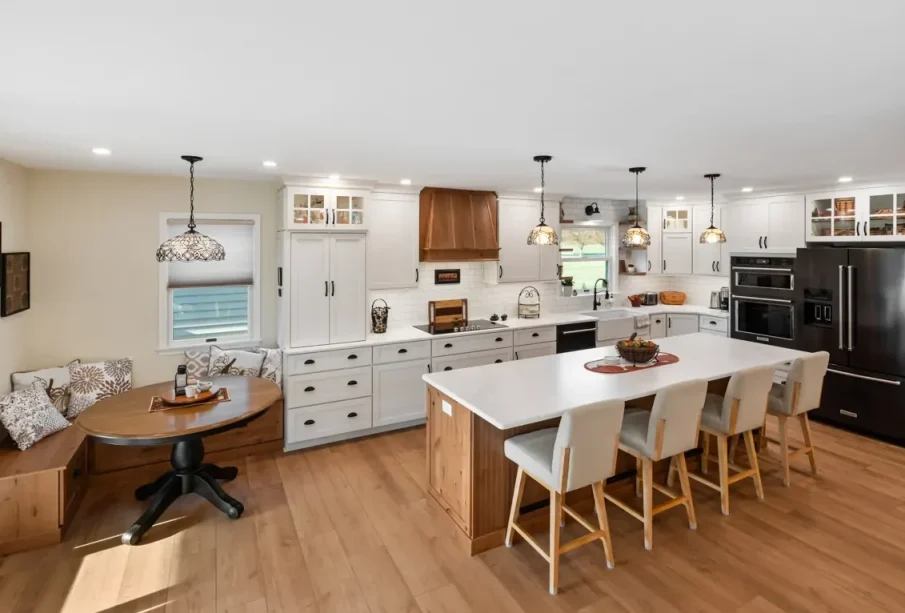
Design starts with layout. A kitchen that works feels bigger, cleaner, and more expensive—regardless of square footage.
High-Value Layout Features
-
Open or semi-open plans that connect to dining or living areas
-
Clear work zones (prep, cook, clean, storage)
-
Efficient traffic flow that avoids bottlenecks
Poor layouts—tight corners, awkward islands, or blocked walkways—can instantly turn buyers off, even if finishes are expensive.
Cabinetry: Where Quality Is Immediately Visible
Cabinets dominate visual space, making them one of the strongest value drivers in kitchen design.
Buyers notice:
-
Solid wood or plywood construction
-
Soft-close hinges and drawers
-
Clean, timeless door styles
Overly ornate or trendy cabinets may age quickly, while neutral, well-built cabinetry holds value longer and appeals to a wider audience.
Countertops and Surfaces That Increase Perceived Worth
Countertops act as a visual anchor. They don’t just need to be durable—they need to look right.
Popular value-boosting options include:
-
Quartz for low maintenance and consistency
-
Granite for natural appeal
-
Solid-surface materials for modern homes
Cheap laminates or heavily worn surfaces often signal future repair costs, which buyers mentally subtract from their offer.
Appliances: Modern, Efficient, and Well-Placed
Appliances influence value less by brand and more by integration and condition.
What buyers prefer:
Overspending on luxury appliances rarely delivers full ROI unless the home itself is high-end.
Lighting: The Silent Value Multiplier
Lighting affects how large, clean, and welcoming a kitchen feels.
Effective Lighting Design Includes:
-
Task lighting under cabinets
-
Ambient ceiling lighting for balance
-
Accent fixtures over islands or dining areas
A bright kitchen photographs better, shows better, and leaves a stronger emotional impression—especially during showings.
Storage and Organization: Practical Value Buyers Can Feel
Smart storage increases usable space without increasing square footage.
High-impact storage upgrades:
Buyers imagine daily life in the space, and efficient storage helps them see comfort instead of clutter.
Timeless Design vs. Trend Chasing
Trends attract attention—but longevity protects value.
Timeless elements that age well:
Ultra-trendy colors, bold patterns, or novelty layouts can reduce appeal within just a few years, limiting resale potential.
Renovation ROI: What Actually Pays Off
Not every kitchen upgrade delivers equal returns.
High ROI improvements:
Lower ROI upgrades:
The best returns come from balance—upgrading to match the home’s overall market position.
The Emotional Factor Buyers Rarely Admit
Beyond logic, kitchens sell homes emotionally. A kitchen that feels warm, functional, and current creates confidence. Buyers worry less about hidden issues and feel more comfortable offering closer to asking price.
That emotional comfort often translates into:
Final Thoughts
Kitchen design has a direct and measurable impact on home value—but only when upgrades are thoughtful, proportional, and buyer-focused. Function, flow, and timeless appeal consistently outperform flashy features.
A smart kitchen doesn’t shout luxury. It quietly convinces buyers the home is worth every dollar.
Frequently Asked Questions (FAQs)
1. Does renovating a kitchen always increase home value?
Not always. Poor design choices or over-improving beyond neighborhood standards can limit returns.
2. What kitchen upgrade adds the most value?
Cabinet updates combined with modern countertops typically deliver the strongest ROI.
3. Are open kitchens better for resale value?
In most markets, yes. Open layouts appeal to modern buyers and improve perceived space.
4. Do smart kitchen appliances increase home value?
They add appeal but rarely increase appraisal value unless integrated seamlessly.
5. Is it better to remodel fully or make partial updates?
Partial updates often provide better ROI if the layout is functional and cabinets are solid.
6. How important is kitchen lighting for resale?
Very important. Poor lighting can make even a new kitchen feel dated or cramped.
7. Should kitchens be neutral for better resale?
Yes. Neutral designs attract more buyers and reduce resistance during decision-making.